One prevailing theme of modernism is the fascination with the great divide between the two social classes — that of great wealth and that of great poverty. Or perhaps it is better to say the lack of divide between the two, for the ever increasing prevalence of the middle/working class in the late 19th and early 20th centuries highlighted a connection between classes that had previously been underexplored. Never before had so many people been able to read, despite their lack of upper class wealth or breeding, and this new readership led modernists to explore a sense of mutual humanity that transcends social class. This new class of people was fascinating because it allowed modernists to explore people who were representative of both everyone and no one — much like modernism itself, the working class was a blurring of all the prescribed rules of social hierarchy. Many writers struggled to capture the working class reality, falling on themes of violence, escapism, and skewed perceptions of reality to explore the identity of humanity itself. In the juxtaposition of upper and working class reality, we have to wonder: can anyone’s experiences can actually portray the reality of human existence?
“There lay a young man, fast asleep — sleeping so soundly, so deeply, that he was far, far away from them both. Oh, so remote, so peaceful. He was dreaming. Never wake him up again. His head was sunk in the pillow, his eyes were closed; they were blind under the closed eyelids. He was given up to his dream. What did garden parties and baskets and lace frocks matter to him? He was wonderful, beautiful. While they were laughing and while the band was playing, this marvel had come to the lane. Happy…happy… All is well, said that sleeping face. This is just as it should be. I am content.
But all the same you had to cry, and she couldn’t go out of the room without saying something to him. Laura gave a loud childish sob.
‘Forgive my hat,’ she said.” (Mansfield, 298)
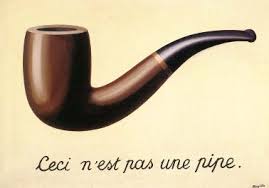
This is a hat.
This is a hat with ribbons
and flowers and colorful, colorful string,
with silks and satins;
beauty turned function turned style.
This is a hat to show off, to show up, to show
exactly who you are, show
exactly what you are, show
exactly who and what you are not.
This is a hat meant for the limelight, for
movie stars and fur coats and
diamond studded heads on diamond studded necks, for
Somebody who never wears the same dress twice, for
Somebody who makes the front page, for
Somebody who laughs, for
Somebody who glitters, for
Somebody.
This is a hat that women go to war for –
slashing at eyes in shopping mall parking lots,
lacquered nails turned
ugly claws
splintering faces and nails and futures –
meanwhile
Somebody adjusts the tilt of the brim
and sashays on by
watching the melee from the charcoal-tinted windows
of her limousine.
This is not a hat.
-P.K.
 making it new.